
Fine Street Mining


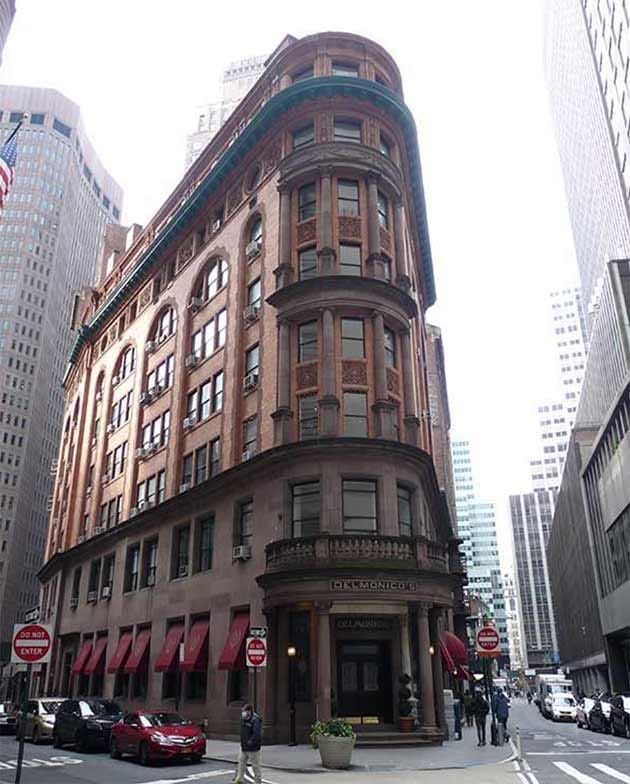
South William Street in lower Manhattan curls north from Broad Street to the intersection of Beaver and William, creating a pair of virtual triangle-shaped plots, the better to build two unusually-shaped buildings. The first of them is the famed Delmonico’s Restaurant building at #56 Beaver, a Renaissance Revival tower completed in 1891. Swiss immigrant brothers John and Peter Delmonico opened a pastry shop on William Street in 1827, and their restaurant opened in this location in the late 1830s, becoming a massive success. At its height the restaurant had ten branch locations, with the flagship located here. The original Delmonico’s went out of business in 1919, with other restaurants taking the famed name for nearly a century after. Delmonico’s is once again open after a closure during the pandemic.
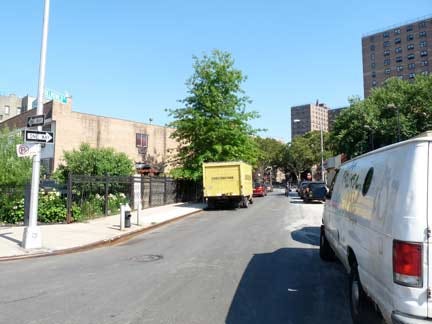
Meanwhile, way out in Bedford-Stuyvesant, Brooklyn, there’s a curiously slanted street running one block between Ellery Street and Park Avenue between Tomkons and Throop Avenues.
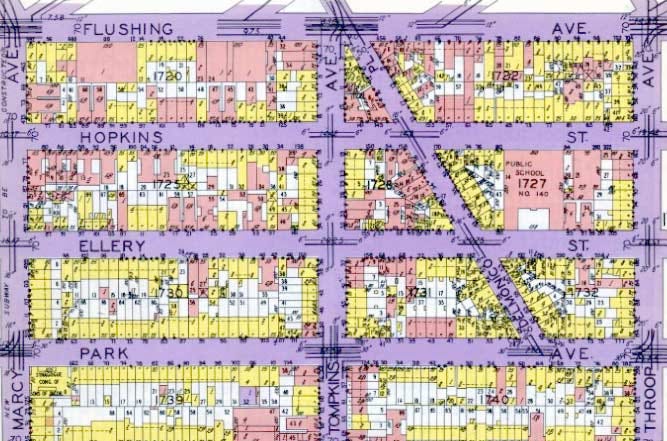
Earlier maps of the area, though, show it continuing southeast as an extension of Harrison Avenue at Flushing Avenue.
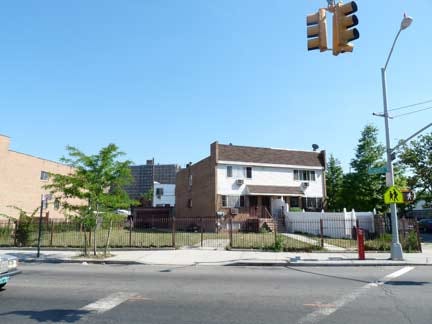
A building constructed on a slant at Flushing Avenue shows its former course.
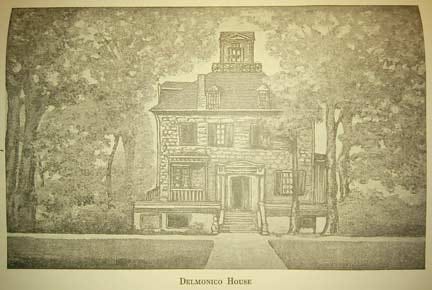
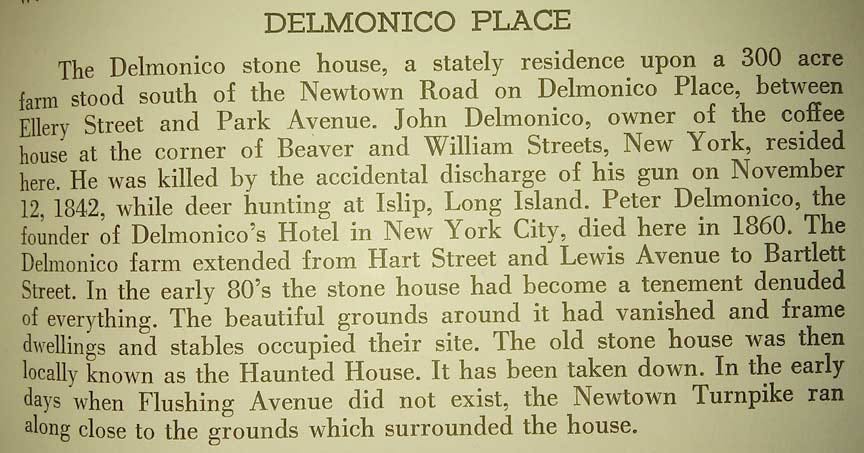
Could the Manhattan restaurant and this slight street in Bedford-Stuyvesant have anything to do with the other? Most likely.
“Delmonico Place… is part of the driveway from the old Brooklyn-Newtown Road to the Delmonico farm and villa. This is also a reminder of the legendary Delmonico’s, for ninety years New York’s most celebrated restaurant. In 1834 the brothers John and Peter Delmonico acquired a country seat on the rural western end of Long Island. In largely open country they bought 220 acres of Williamsburg farmland for $16,000 and built an imposing Italian-style stone villa.
“John Delmonico died in 1842 and his brother Peter retired to the country villa in the 1850’s when their nephew Lorenzo took over running the burgeoning restaurant empire in Manhattan. Williamsburg was absorbed into the city of Brooklyn in 1855 and the value of the Delmonico farm increased enormously. On Peter’s death in 1860 the 220 acres were divided among his children as building lots. The property now extended from Broadway on the north to Hart Street on the south, from Marcy Avenue on the west to Lewis Avenue on the east. No trace is left of the imposing Italian-style stone villa — only the small part of the driveway.”
More on this Forgotten NY page.
Kevin Walsh is the webmaster of the award-winning website Forgotten NY, and the author of the books Forgotten New York (HarperCollins, 2006) and also, with the Greater Astoria Historical Society, Forgotten Queens (Arcadia, 2013)